
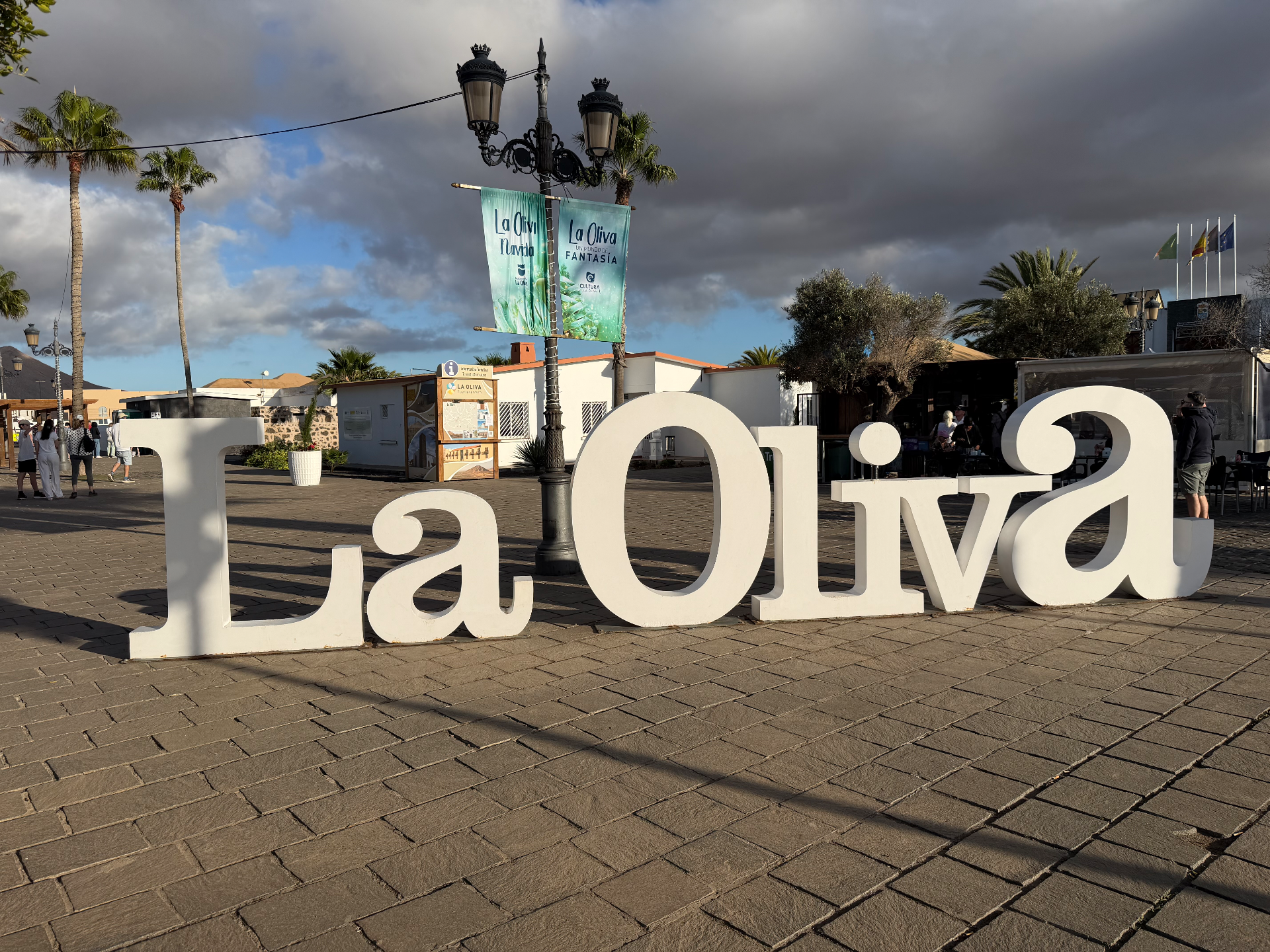
La Oliva
Calle Emilio Castellot Martinez 2, 35640 La Oliva, Fuerteventura, Spain
“Visit La Oliva, Fuerteventura: Historic Canarian Landmark Tour”
Photos
Our Review
We visited the town of La Oliva as part of our MSC Musica cruise. The town was part of an excursion arranged by MSC. This town was part of a 4.5 hour bus tour
About this place
La Oliva is a charming village and municipal capital in northern Fuerteventura, Spain, named after its wild olive trees and set amid fertile plains ideal for agriculture. Visitors explore its historic center, featuring the imposing Casa de los Coroneles and the Parroquia de Nuestra Señora de Candelaria church. The town offers a glimpse into traditional Canarian rural life, with nearby nature reserves like Isla de Lobos accessible for day trips.
Key Highlights
- Casa de los Coroneles: 18th-century fortress-like mansion, former headquarters of Fuerteventura's military commander, displaying farm tools and historical exhibits.
- Parroquia de Nuestra Señora de Candelaria: Main church in the town center, a key architectural landmark.
- Historic center with shops, restaurants, pharmacy, and public swimming pool.
- Surrounding fertile landscapes and wild olive trees, ideal for scenic walks.
- Proximity to Isla de Lobos Nature Reserve for nature enthusiasts.
Tips for visitors
- Ideal for a short 1-2 hour visit on a bus tour; combine with nearby Corralejo or nature sites.
- Wear comfortable shoes for walking the flat town center and exploring historic buildings.
- Visit during daytime for open attractions; check local schedules for Casa de los Coroneles.
- Bring water and sun protection, as Fuerteventura's climate is warm and dry.
- Park easily in the town; public facilities like restrooms available near the center.
- Dine at local restaurants for traditional Canarian cuisine after sightseeing.
Context
Settled since pre-Hispanic times due to its fertile plains, La Oliva developed an agrarian economy focused on cereals, legumes, and goat farming from the 16th century. The Casa de los Coroneles, built in the early 18th century, served as the island's military headquarters until the 19th century, highlighting the role of the Cabrera Béthencourt family and local colonels.
Detailed Ratings
Value
Location
Attraction Experiences
Attraction
Kymen Paviljonki
Helsingintie 408, 45740 Kuusankoski, Finland
Attraction
Estrela do Mar
Largo do Corpo 1 A 7, Funchal, Madeira
Attraction
Pajara town
Avenida El Saladar, Centro Comercial Cosmo, Local 141, 35625 Morro Jable, Pájara, Fuerteventura, Spain
Attraction
Cabo Girao
Cabo Girão, Câmara de Lobos, Madeira, Portugal